

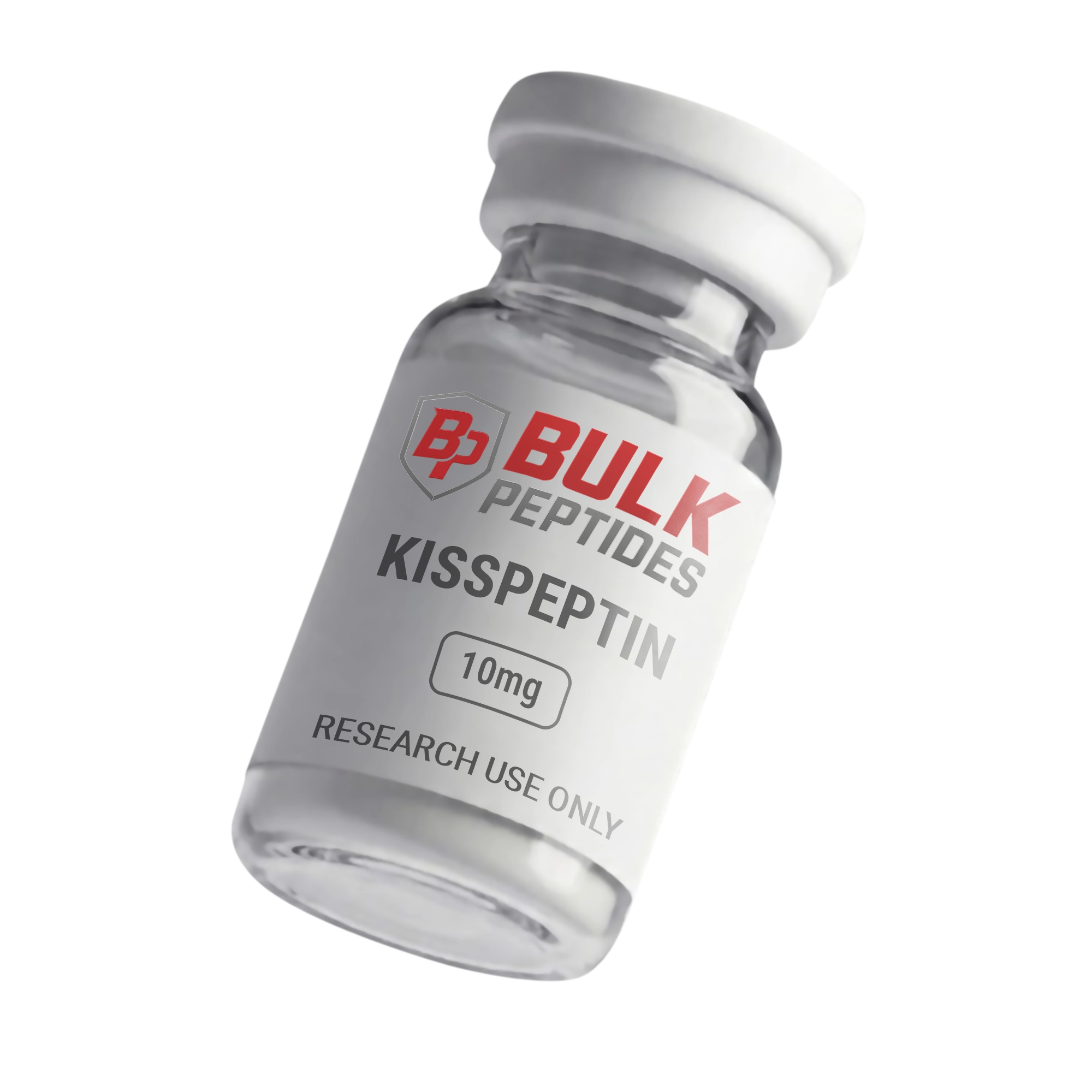
Kisspeptin
Kisspeptin-10 is a synthetic decapeptide corresponding to the C-terminal region of the larger Kisspeptin protein (metastin). It functions as a high-affinity endogenous ligand for the G-protein coupled receptor GPR54 (also known as the Kiss1 receptor). Research investigates its role as an upstream regulator of the hypothalamic-pituitary-gonadal (HPG) axis, specifically influencing the release of Gonadotropin-Releasing Hormone (GnRH). For Research Use Only. Not for human consumption.
Kisspeptin-10 possesses the molecular formula C₆₃H₇₈N₁₈O₁₄ and consists of a chain of 10 amino acids. It is derived from the KISS1 gene, which encodes a larger precursor protein known as metastin. This specific fragment is chemically synthesized to retain the bioactive carboxyl-terminal sequence required for receptor binding affinity in laboratory settings.
The primary mechanism of action explored in scientific literature involves the binding of Kisspeptin-10 to the GPR54 receptor. Upon activation, this receptor initiates intracellular signaling cascades involving phospholipase C and calcium mobilization. Studies suggest that this signaling pathway is critical for the depolarization of GnRH neurons, thereby influencing the pulsatile secretion of downstream hormones such as Luteinizing Hormone (LH) and Follicle-Stimulating Hormone (FSH).
In animal models, Kisspeptin-10 is frequently utilized to study the onset of puberty and the regulation of reproductive feedback loops. Research indicates that the peptide may play a pivotal role in metabolic status and reproductive function connection. Investigators also examine the sensitivity of the GPR54 receptor to desensitization following continuous exposure to the ligand in vitro.
This product is strictly for laboratory and research purposes only. Kisspeptin-10 is not intended for human use, diagnostic, or therapeutic procedures. It serves as a reagent for scientific study and method development.
References
- Gottsch, M. L., et al. (2004). “A role for kisspeptins in the regulation of gonadotropin secretion in the mouse.” Endocrinology, 145(9), 4073-4077.
- Oakley, A. E., et al. (2009). “Kisspeptin Signaling in the Brain.” Endocrine Reviews, 30(6), 713–743.
- Kotani, M., et al. (2001). “The metastasis suppressor gene KiSS-1 encodes kisspeptins, the natural ligands of the orphan G protein-coupled receptor GPR54.” Journal of Biological Chemistry, 276(36), 34631-34636.