

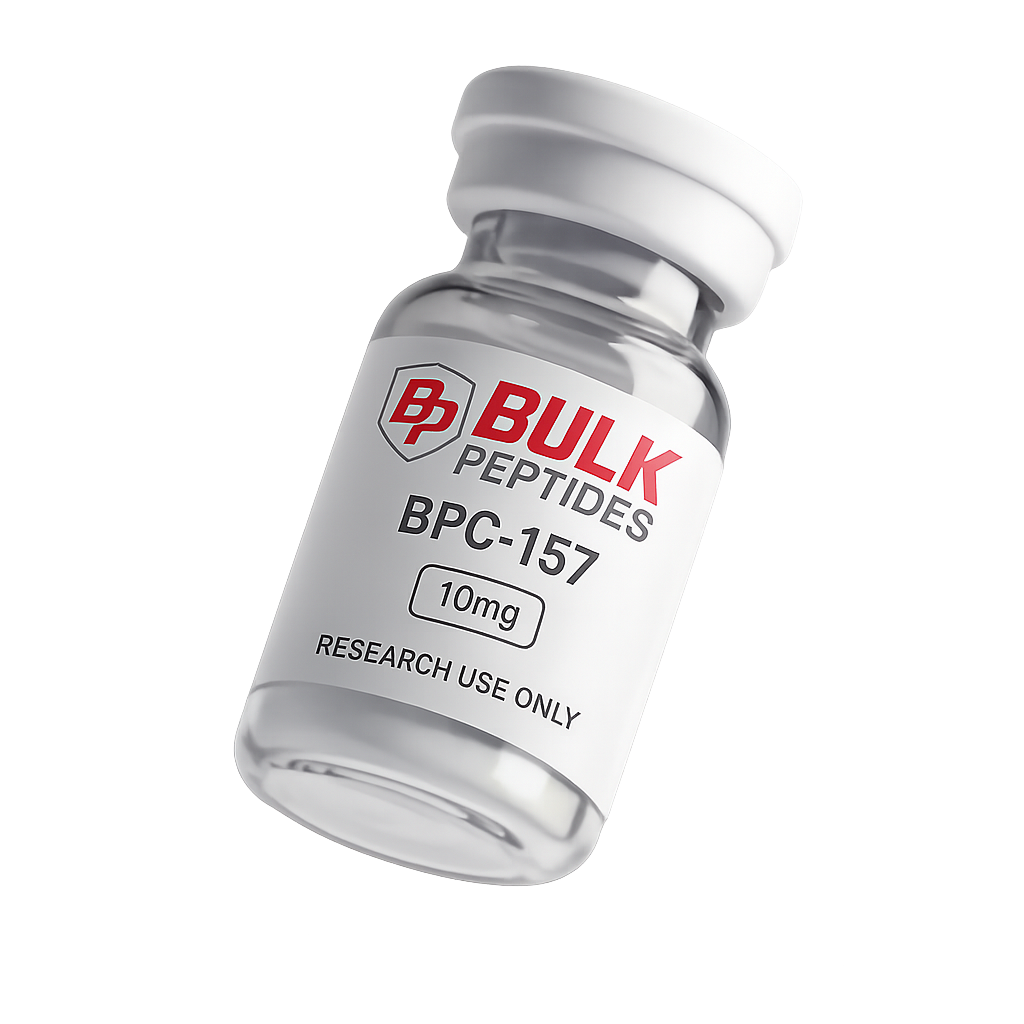
BPC-157
BPC-157 is a synthetic pentadecapeptide comprised of 15 amino acids. It represents a partial sequence of the Body Protection Compound (BPC) found in human gastric juice. Research investigates this peptide for its stability in various pH environments and its potential interaction with the nitric oxide (NO) system and growth factors involved in angiogenesis. For Research Use Only. Not for human consumption.
BPC-157, chemically known as a pentadecapeptide, possesses the molecular formula C₆₂H₉₈N₁₆O₂₂. It is a synthetic fragment derived from a protein naturally occurring in gastric fluids. Unlike many peptides that degrade rapidly, BPC-157 is noted in scientific literature for its stability during biochemical analysis. Researchers utilize this peptide to study cellular signaling pathways that may influence tissue organization and repair mechanisms.
Extensive studies have been conducted to understand the interaction between BPC-157 and the nitric oxide (NO) system. Research indicates that BPC-157 may influence the expression of Early Growth Response 1 (EGR-1) and Vascular Endothelial Growth Factor (VEGF). These pathways are critical in the study of angiogenesis, the physiological process through which new blood vessels form from pre-existing vessels.
In animal model studies, BPC-157 has been observed to modulate fibroblast migration and proliferation. Researchers postulate that this action is mediated through the activation of the VEGFR2 pathway. Studies on tendon fibroblasts suggest that BPC-157 may influence cell survival under stress conditions in vitro, providing a model for examining soft tissue dynamics without the variables present in whole-organism studies.
This product is strictly for laboratory and research purposes only. BPC-157 is not intended for human use, diagnostic, or therapeutic procedures. It serves as a reagent for scientific study and method development.
References
- Sikiric, P., et al. (2016). “Brain-gut Axis and Pentadecapeptide BPC 157: Theoretical and Practical Implications.” Current Neuropharmacology, 14(8), 857-865.
- Chang, C. H., et al. (2011). “The promoting effect of pentadecapeptide BPC 157 on tendon healing involves tendon outgrowth, cell survival, and cell migration.” Journal of Applied Physiology, 110(3), 774-780.
- Hsieh, M. J., et al. (2017). “Therapeutic potential of pro-angiogenic BPC157 is associated with VEGFR2 activation and up-regulation.” Journal of Molecular Medicine, 95(3), 323-333.