

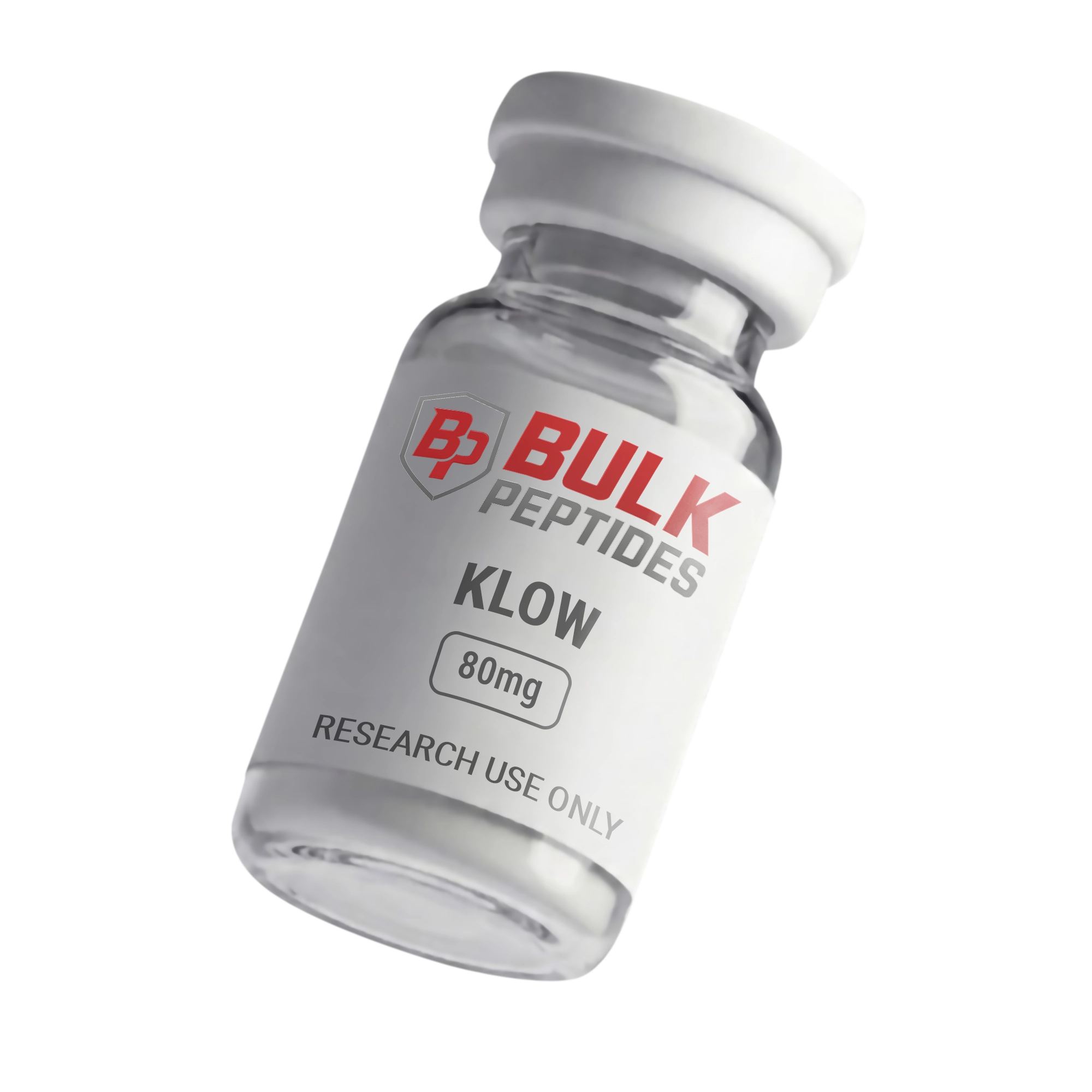
KLOW Blend
The Klow Blend is a comprehensive research formulation combining four distinct bioactive peptides: BPC-157, TB-500 (Thymosin Beta-4), GHK-Cu (Copper Peptide), and KPV. This synergistic mixture is designed to investigate multiple convergent pathways simultaneously, specifically focusing on the intersection of soft tissue repair (angiogenesis and cell migration), collagen synthesis, and the modulation of inflammatory cytokines via the NF-κB pathway. For Research Use Only. Not for human consumption.
The Klow Blend is a specialized multi-peptide complex formulated to explore the synergistic effects of four well-characterized research compounds. By combining BPC-157 (C₆₂H₉₈N₁₆O₂₂), TB-500 (C₂₁₂H₃₅₀N₅₆O₇₈S), GHK-Cu (C₁₄H₂₄CuN₆O₄), and KPV (C₁₆H₃₀N₄O₄), researchers can observe the simultaneous activation of regenerative and anti-inflammatory cascades that are typically studied in isolation.
Component Overview and Mechanism:
- BPC-157: A pentadecapeptide derived from gastric signaling proteins. Research suggests it modulates the nitric oxide (NO) pathway and growth factor expression (VEGF), promoting angiogenesis and the repair of tendons and ligaments.
- TB-500: A synthetic version of Thymosin Beta-4. It is investigated for its actin-sequestering properties, which are critical for cytoskeletal organization and cellular migration during tissue remodeling.
- GHK-Cu: A copper-binding tripeptide known to influence the expression of metalloproteinases (MMPs) and collagen synthesis. It is a primary subject in dermatological and extracellular matrix research.
- KPV: A C-terminal fragment of alpha-MSH. This tripeptide is included for its specific ability to downregulate NF-κB activation, providing a targeted anti-inflammatory control within the experimental model.
Scientific investigation into the Klow Blend focuses on the “holistic” response of tissue samples to injury. While GHK-Cu and BPC-157 are posited to enhance structural integrity and blood flow, KPV is observed to manage the oxidative stress and inflammatory response that often impedes healing. This blend is frequently utilized in models of complex tissue damage, such as dermatological wounds or musculoskeletal trauma, to evaluate accelerated recovery parameters.
This product is strictly for laboratory and research purposes only. The Klow Blend is not intended for human use, diagnostic, or therapeutic procedures. It serves as a reagent for scientific study and method development.
References
- Pickart, L., et al. (2018). “GHK-Cu may prevent oxidative stress in tissue remodeling.” International Journal of Molecular Sciences, 19(7), 1987.
- Sikiric, P., et al. (2018). “Stable gastric pentadecapeptide BPC 157 in trials for inflammatory bowel disease.” Current Pharmaceutical Design, 24(18), 1990-2001.
- Philp, D., et al. (2004). “Thymosin beta4 promotes angiogenesis, wound healing, and hair follicle development.” Mechanisms of Ageing and Development, 125(2), 113-115.
- Dalmasso, G., et al. (2008). “PepT1-mediated tripeptide KPV uptake reduces intestinal inflammation.” Gastroenterology, 134(1), 166-178.