Bioactive Research Peptides
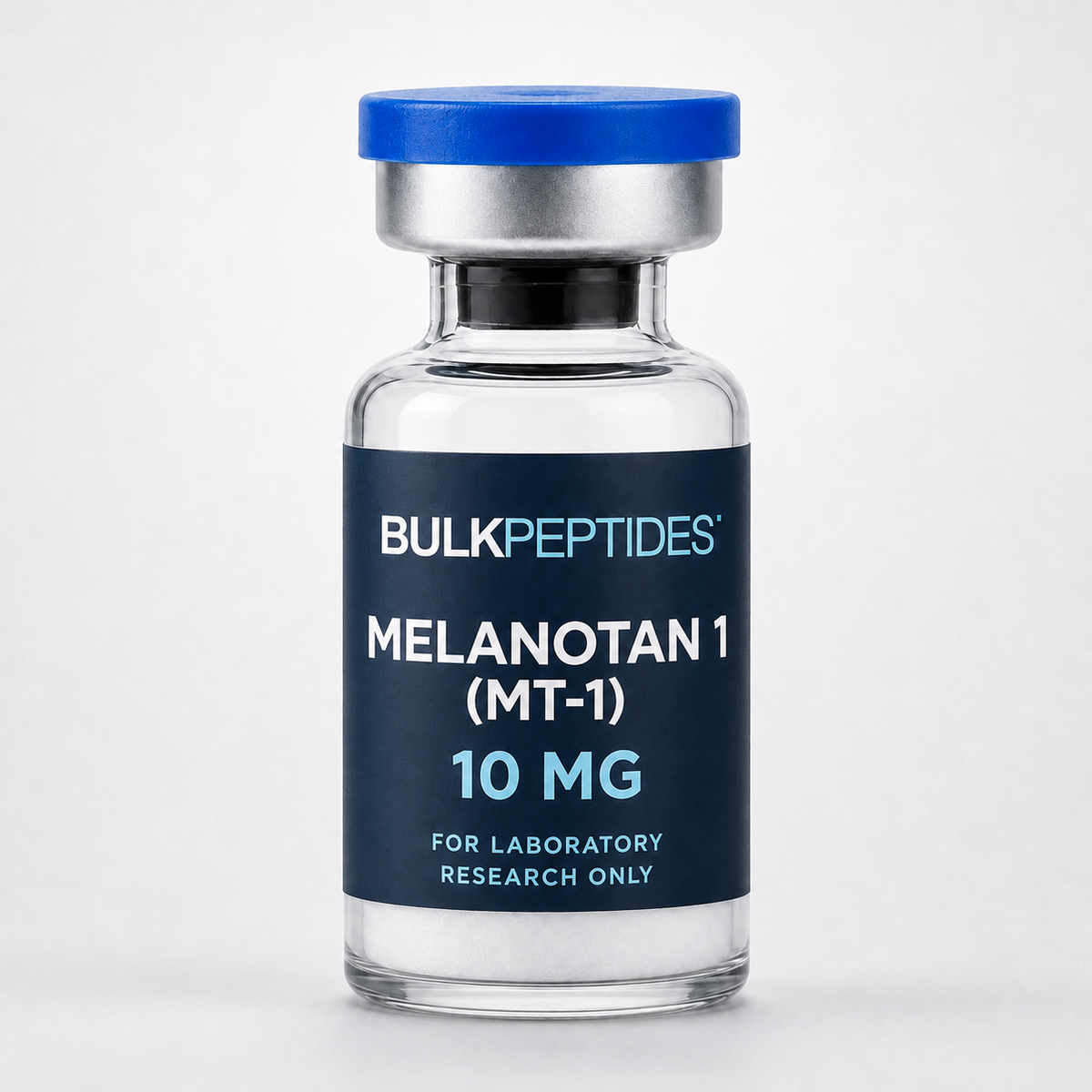
Melanotan 1 (MT-1)
Available
Volume savings
Automatic discounts across eligible products and sizes.
- 2+ items5% off
- 3+ items10% off
- 5+ items15% off
- 10+ items20% off
Savings apply automatically in your cart.
Offer details
Mix eligible products and sizes, including Retatrutide vials. Items already in your cart count toward your discount. View cart.
SKU:
Supplied for laboratory research and development. Not for human or veterinary use, consumption, or clinical applications.
Product information
About Melanotan 1 (MT-1)
Melanotan 1 (MT-1) Research Peptide
Melanotan 1 (MT-1) is available as a peptide material for controlled laboratory research. Use the product listing and available batch information to assess its suitability for your research requirements.
Product information
Select from the presentations shown on this page. For a specific batch or analytical requirement, contact [email protected] for available product documentation before ordering.
Read the Melanotan 1 (MT-1) research guide
For laboratory research use only. Not for human or veterinary use, diagnosis, treatment, or clinical application.
Product research information
Melanotan 1 (MT-1), also known in scientific literature as afamelanotide, possesses the molecular formula C₇₈H₁₁₁N₂₁O₁₉. It is structurally comprised of a linear chain of 13 amino acids. Unlike the cyclic structure of Melanotan 2 (MT-2), MT-1 more closely mirrors the native structure of α-MSH, albeit with specific amino acid substitutions designed to resist rapid enzymatic degradation and extend its stability in laboratory assays.
Scientific studies focus predominantly on the interaction between MT-1 and the melanocortin 1 receptor (MC1R), which is located on the surface of melanocytes. Upon binding, MT-1 activates the adenylyl cyclase signaling pathway, subsequently increasing intracellular levels of cyclic AMP (cAMP). This cascade triggers the upregulation of the microphthalmia-associated transcription factor (MITF), a crucial step that promotes the expression of tyrosinase and drives the synthesis of melanin (melanogenesis).
In research models, MT-1 is utilized to study isolated pigmentation pathways without the confounding variables associated with central nervous system stimulation. Because MT-1 exhibits significantly lower binding affinity for central melanocortin receptors (such as MC3R and MC4R) compared to MT-2, researchers use it to examine cellular photoprotection, DNA repair mechanisms in skin cell cultures, and the extracellular matrix response to simulated solar damage.
References
- Hadley, M. E., & Dorr, R. T. (2006). “Melanocortin peptide therapeutics: historical milestones, clinical studies and commercialization.” Peptides, 27(4), 921-930.
- Abdel-Malek, Z. A., et al. (2006). “Alpha-MSH tripeptide analogs activate the melanocortin 1 receptor and reduce UV-induced DNA damage in human melanocytes.” Pigment Cell Research, 19(5), 428-434.
- Eberle, A. N., et al. (1991). “Melanocyte-stimulating hormone: structure-activity relationships, receptor binding and signal transduction.” Journal of Receptor Research, 11(1-4), 311-322.
Need help with product information?
Our team can help with available formats, bulk quantities, and documentation requests.