Bioactive Research Peptides
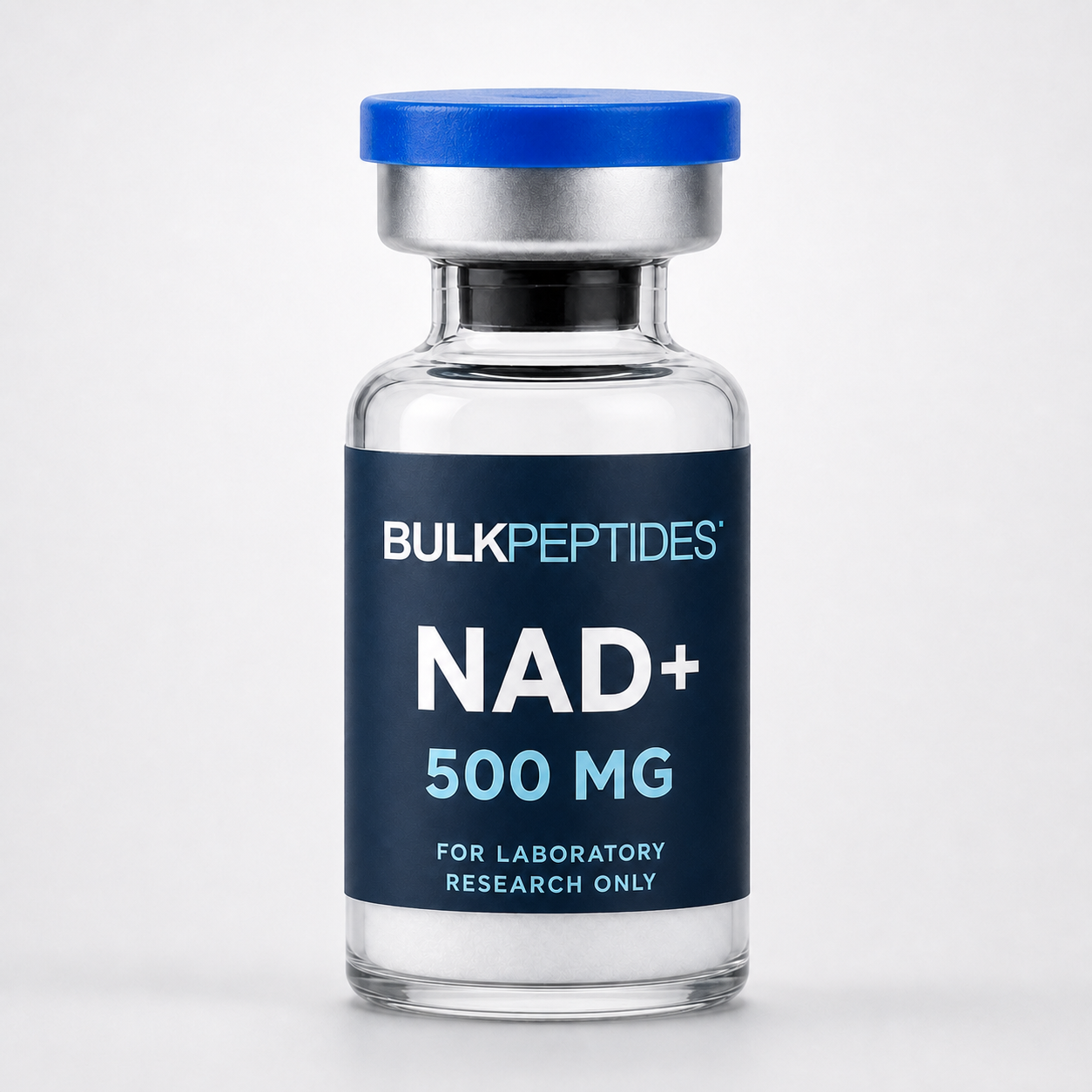
NAD+
Available
Volume savings
Automatic discounts across eligible products and sizes.
- 2+ items5% off
- 3+ items10% off
- 5+ items15% off
- 10+ items20% off
Savings apply automatically in your cart.
Offer details
Mix eligible products and sizes, including Retatrutide vials. Items already in your cart count toward your discount. View cart.
SKU: klow-80mg-single-1-1-3-1
Supplied for laboratory research and development. Not for human or veterinary use, consumption, or clinical applications.
Product information
About NAD+
NAD+ Research Compound
NAD+ is offered as a laboratory research compound. As a coenzyme rather than a peptide chain, it has its own identity and analytical requirements; review the listed product information for your research workflow.
Product information
Select from the presentations shown on this page. For a specific batch or analytical requirement, contact [email protected] for available product documentation before ordering.
For laboratory research use only. Not for human or veterinary use, diagnosis, treatment, or clinical application.
Product research information
NAD+ is a coenzyme with the molecular formula C₂₁H₂₇N₇O₁₄P₂. It is the oxidized form of Nicotinamide Adenine Dinucleotide, characterized by the presence of a positive charge on the nitrogen atom of the nicotinamide ring. This structure allows it to accept electrons during metabolic reactions, converting to NADH. In laboratory settings, NAD+ is essential for studying cellular respiration, specifically the transfer of electrons in the mitochondrial electron transport chain.
Beyond its role in redox signaling, NAD+ is investigated as a necessary substrate for several classes of enzymes. Most notably, it is required for the activity of Sirtuins (Class III histone deacetylases), which regulate gene expression, cellular aging, and stress resistance. It also serves as a substrate for PARPs, which are enzymes involved in DNA repair and genomic stability. The consumption of NAD+ by these enzymes links cellular metabolic status directly to chromatin structure and transcriptional regulation.
Scientific studies frequently utilize NAD+ to examine the decline of mitochondrial function associated with age-related metabolic changes. Research in murine models suggests that intracellular NAD+ levels decrease over time, prompting investigations into supplementation pathways and precursor molecules. Investigators monitor these levels to understand the mechanisms of circadian rhythm regulation and neuroprotection in vitro.
References
- Imai, S., & Guarente, L. (2014). “NAD+ and sirtuins in aging and disease.” Trends in Cell Biology, 24(8), 464-471.
- Rajman, L., et al. (2018). “Therapeutic Potential of NAD-Boosting Molecules: The In Vivo Evidence.” Cell Metabolism, 27(3), 529-547.
- Ying, W. (2008). “NAD+/NADH and NADP+/NADPH in cellular functions and cell death: regulation and biological consequences.” Antioxidants & Redox Signaling, 10(2), 179-206.
Need help with product information?
Our team can help with available formats, bulk quantities, and documentation requests.