Research Support Compounds
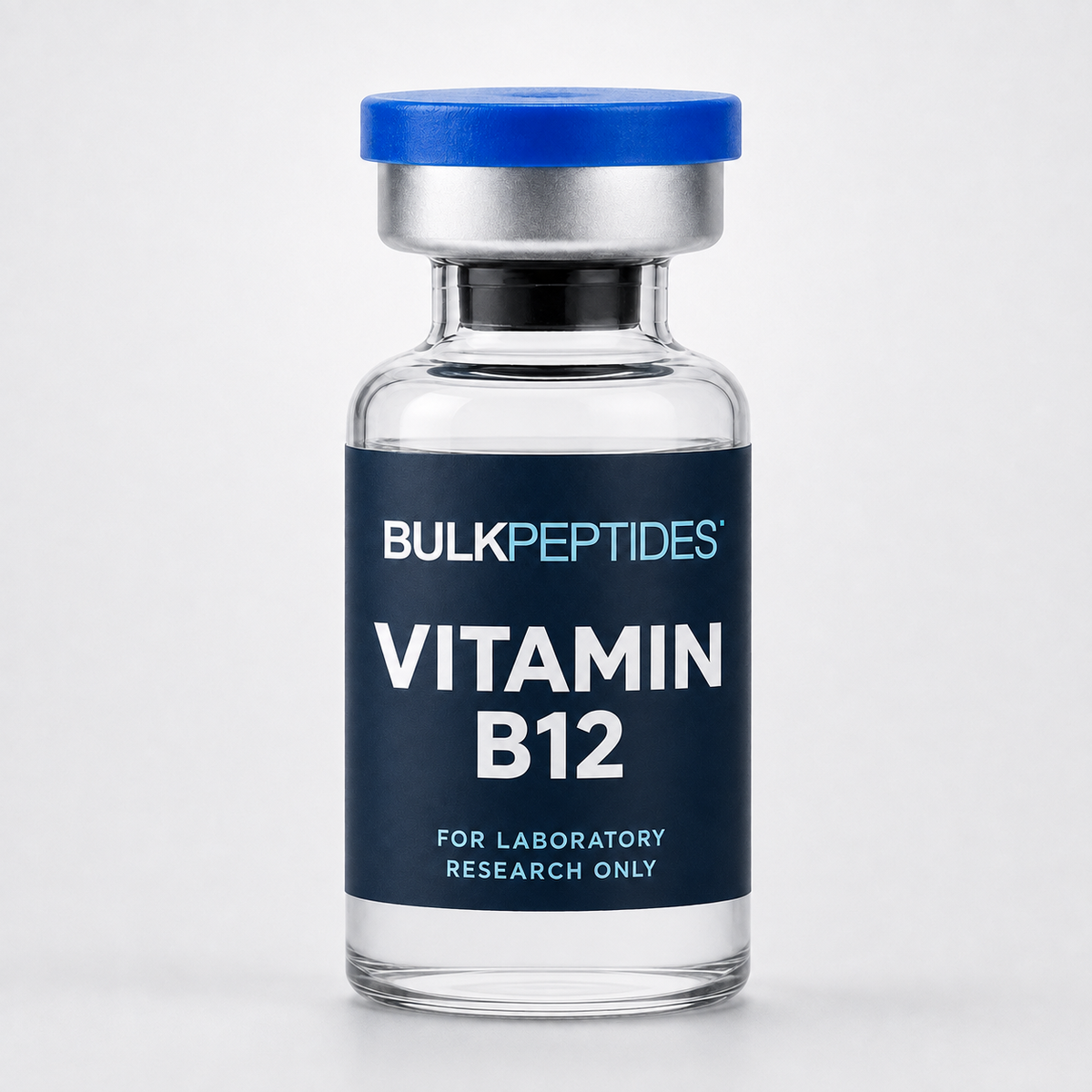
Vitamin B12
Available
Volume savings
Automatic discounts across eligible products and sizes.
- 2+ items5% off
- 3+ items10% off
- 5+ items15% off
- 10+ items20% off
Savings apply automatically in your cart.
Offer details
Mix eligible products and sizes, including Retatrutide vials. Items already in your cart count toward your discount. View cart.
SKU: B1210ML
Supplied for laboratory research and development. Not for human or veterinary use, consumption, or clinical applications.
Product information
About Vitamin B12
Vitamin B12 Research Compound
Vitamin B12 is available as a laboratory research compound, with the current product description identifying methylcobalamin. Check the listed presentation and the documentation relevant to your analytical requirements.
Product information
Select from the presentations shown on this page. For a specific batch or analytical requirement, contact [email protected] for available product documentation before ordering.
For laboratory research use only. Not for human or veterinary use, diagnosis, treatment, or clinical application.
Product research information
Methylcobalamin is a specific form of Vitamin B12 with the molecular formula C₆₃H₉₁CoN₁₃O₁₄P. Structurally, it consists of a corrin ring surrounding a central cobalt ion. In this specific configuration, the ligand attached to the cobalt is a methyl group, distinguishing it from other forms like Cyanocobalamin or Hydroxocobalamin. This structural difference allows Methylcobalamin to participate directly in methyl-group transfer reactions without the need for metabolic conversion.
Scientific interest in Methylcobalamin centers on its role as a cofactor for the cytosolic enzyme methionine synthase. This enzyme is responsible for catalyzing the remethylation of homocysteine to methionine, an essential amino acid. By modulating this pathway, researchers investigate the compound’s influence on cellular DNA synthesis and the regulation of homocysteine levels, which are markers often associated with vascular and endothelial health in research models.
In neurobiological research, Methylcobalamin is studied for its potential effects on the nervous system. Animal studies have explored its involvement in the synthesis of neuronal lipids and the maintenance of the myelin sheath. Furthermore, investigations utilize this compound to observe its impact on nerve regeneration and axonal transport in models of peripheral neuropathy.
References
- Zhang, Y., et al. (2013). “Methylcobalamin: A Potential Vitamin of Pain Modulation.” Neural Plasticity, 2013, 424651.
- Takahashi, K., et al. (2005). “Methylcobalamin increases Erk1/2 and Akt activities through the methylation cycle and promotes nerve regeneration in a rat sciatic nerve injury model.” Experimental Neurology, 192(2), 289-299.
- Wolffenbuttel, B. H. R., et al. (2019). “The Many Faces of Cobalamin (Vitamin B12) Deficiency.” Mayo Clinic Proceedings: Innovations, Quality & Outcomes, 3(2), 200-214.
Need help with product information?
Our team can help with available formats, bulk quantities, and documentation requests.